On October 15, 2026, Tesla finally unveiled its long-delayed next-generation Roadster at SpaceX’s test facility in McGregor, Texas.
And Tesla did not settle for driving it onto a stage.
The unmanned Roadster climbed a curved structure, drove upside down using an underbody suction system, released into the air and used high-pressure thrusters to rotate and land back on its wheels. In another demonstration, it launched over a row of Tesla vehicles.
Tesla also demonstrated extraordinary acceleration, claiming the thruster-equipped Roadster could reach 60 mph in less than one second.
It was difficult not to watch.
But as an investor, I think this is exactly the kind of moment when we need to separate what is impressive from what is investable.
That distinction matters.
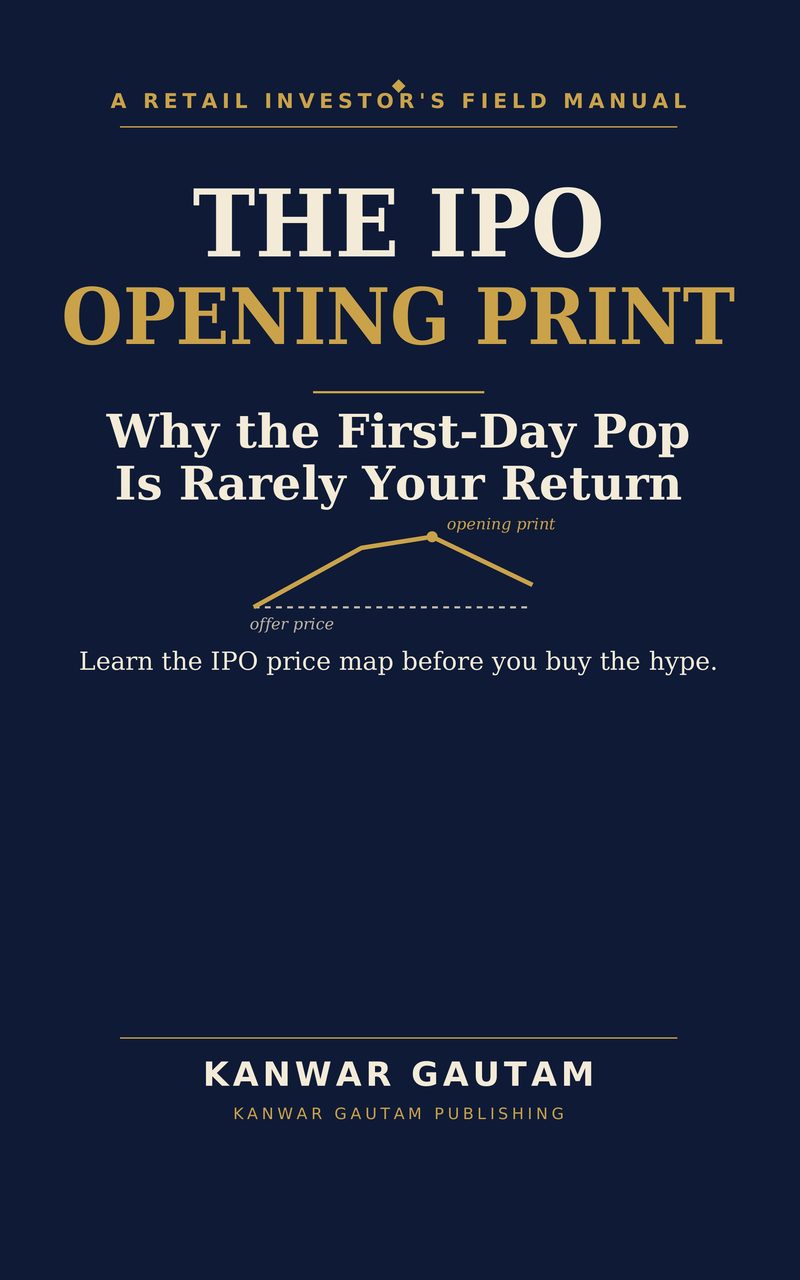
I return to it repeatedly in The IPO Opening Print. A spectacular first-day gain does not necessarily become the return earned by an ordinary IPO investor. In the same way, a spectacular product demonstration does not automatically translate into revenue, profit or shareholder returns.
Tesla proved that it can build something extraordinary.
Now comes the harder question:
Can it turn that engineering achievement into a commercially meaningful product?
What Tesla Actually Demonstrated
The new Roadster brings Tesla and SpaceX engineering closer together than perhaps any previous consumer product associated with Elon Musk.
The most extreme versions use high-pressure gas thrusters to provide additional acceleration and brief airborne capability. Tesla also demonstrated a suction system capable of generating enough downforce to keep the vehicle attached to a surface while inverted.
Tesla presented multiple configurations, ranging from a more conventional high-performance Roadster to increasingly extreme thruster-equipped versions.
The top Rocket version is expected to be highly exclusive and is not currently a conventional road-going automobile in the way most buyers would understand one.
That distinction is important.
Calling this a "flying car" makes a wonderful headline. But Tesla demonstrated short, controlled airborne maneuvers at a closed test facility. That is very different from demonstrating a practical vehicle that consumers can routinely fly from one destination to another.
Engineering achievement? Absolutely.
Everyday flying car? Not yet.
The Part Investors Should Not Ignore: The Roadster Was Announced in 2017
This is where the story becomes more interesting to me.
Tesla originally unveiled the second-generation Roadster in November 2017. At the time, the company talked about extraordinary specifications, including 0-to-60 mph acceleration in 1.9 seconds, approximately 620 miles of range and an expected starting price of $200,000.
Production was originally expected around 2020.
It is now 2026.
Tesla says production is expected to begin in 2028.
That means a customer who reserved one in 2017 could potentially wait around eleven years from reservation to production.
And that creates another story that receives much less attention than a car flying through the air:
the opportunity cost of money.
A $250,000 Deposit Is Still $250,000 of Capital
Some early customers committed substantial sums to secure their position.
Think about what eleven years means financially.
Money has a time value.
Capital invested productively can compound. Cash can earn interest. Businesses can reinvest it. Investors can purchase productive assets.
Money committed to a deposit does something very different.
This doesn't mean someone was necessarily wrong to reserve the Roadster. A wealthy enthusiast may value being among the first owners far more than the investment return that money could have generated elsewhere.
That's perfectly reasonable.
But the economics should still be recognized.
This is one of the principles I try to emphasize in my investing books: every financial decision has an alternative use for the capital.
The visible price is not always the complete price.
Sometimes time is part of the price too.
Tesla and SpaceX: Where the Story Gets Bigger
The Roadster demonstration also arrives while Wall Street is increasingly discussing the relationship between Tesla and SpaceX.
That makes the location of the unveiling significant.
This wasn't simply a Tesla automobile being demonstrated at an ordinary automotive event. It was a Tesla product displaying aerospace-derived technology at a SpaceX facility.
The technological overlap is becoming increasingly visible.
Tesla brings electric vehicles, manufacturing, robotics, autonomous driving and physical AI. SpaceX brings rockets, satellite communications, aerospace engineering and enormous experience operating sophisticated hardware and software together.
There are obvious areas where the companies can learn from one another.
That does not, however, mean investors should jump from "synergy" to "merger."
Barclays and other market observers have discussed the possibility of greater corporate integration between Musk's companies. That makes the subject worth watching.
It doesn't make a merger a fact.
There is an important difference between:
possible → probable → announced → completed.
Markets sometimes price the later stages while the evidence is still sitting at the first one.
That's where investors need discipline.
And What Did Tesla Stock Do?
This is perhaps my favorite part of the story.
Tesla produced one of the most visually spectacular automobile demonstrations in years.
A car effectively flew.
Yet the stock market did not simply respond by shouting, "Buy."
That's a useful reminder of how markets actually work.
Stocks are not voting machines for whether a product is exciting.
Investors eventually have to ask questions about production volume, margins, capital requirements, competitive position, regulatory hurdles and future cash flow.
The Roadster could be an extraordinary engineering achievement while contributing relatively little to Tesla's near-term earnings.
Those two statements can both be true.
The Bigger Lesson: Innovation and Investment Are Not the Same Thing
I have spent years following markets as an independent investor and options trader, and one lesson keeps repeating itself:
A great story and a great investment are not automatically the same thing.
The internet era gave us revolutionary companies that became terrible investments at the wrong prices.
Crypto gave us genuinely important technological ideas surrounded by enormous amounts of speculation.
IPOs regularly produce exciting headlines about first-day gains that ordinary investors could never actually have earned.
And now Tesla can make a Roadster leave the ground.
The technology deserves attention.
But investors still have to ask the boring questions.
What will it cost?
How many can Tesla manufacture?
When will production actually begin?
What regulatory approvals will be required?
How much profit can each vehicle generate?
Does the Roadster materially change Tesla's earnings power?
And perhaps most importantly:
How much of the future are investors already paying for in today's stock price?
Those questions are less exciting than watching a Roadster fly over a line of Teslas.
They are also the questions that matter to an investor.
My Take
I don't see the Roadster demonstration as something investors should dismiss as a publicity stunt.
Engineering experiments that look impractical today can sometimes produce technologies that become valuable elsewhere tomorrow. The Roadster may matter as much for what Tesla and SpaceX engineers learn from building it as for the number of Roadsters eventually sold.
But I wouldn't make the opposite mistake either.
A successful prototype is not mass production.
Mass production is not profitability.
And technological leadership does not automatically guarantee an attractive investment at every valuation.
That is why I prefer questions over predictions.
Tesla has demonstrated something remarkable.
Now I want to see what comes next.
Can Tesla manufacture it?
Can it commercialize the technology?
Can it navigate the regulatory problems?
And can any of this eventually create enough economic value to justify what investors are already expecting from the company?
The Roadster may have left the ground.
Investors should keep their feet firmly on it.
Kanwar Gautam is an independent investor, options trader, author and content creator. He writes about markets in plain language, with an emphasis on risk, patience and separating investment decisions from market hype. His investing books include The IPO Opening Print, The Efficient Options Buyer and Crypto Investing Without Hype, published by Kanwar Gautam Publishing.
This article is for educational and informational purposes only and should not be considered investment advice.